

Have you ever taken a probiotic to improve your gut health?
Maybe it was yoghurt, fermented food, or a supplement. We are constantly told that adding “good bacteria” will improve digestion, strengthen immunity, and restore balance. But while we focus on these friendly microbes, we often overlook another group of organisms that have shared our intestines for thousands of years: parasites.
Like any neighbourhood, the gut is a crowded ecosystem. Its residents compete, cooperate, and influence each other in ways we are only beginning to understand. The question is: are probiotics always the helpful neighbours they are advertised to be, and are parasites always the unwanted guests we assume them to be?

Are probiotics really the gut health solution we were promised?
Probiotic products containing bacteria such as Lactobacillus and Bifidobacterium are widely marketed as a solution for digestive problems and improved immunity – but the effects of probiotics are not universal. Remember, these bacteria do not enter an empty environment but arrive in a gut already occupied by thousands of microbial species, immune cells, and sometimes parasites. This is like introducing a new neighbour into an established community. Even if they are friendly, their impact depends on the existing residents and the environment they enter. Therefore, a probiotic strain that benefits one person may have little effect on another because everyone’s microbiome is unique.
That said, some studies suggest probiotics can provide benefits, particularly in specific conditions such as antibiotic associated diarrhoea or certain digestive disorders. Some probiotic strains also appear capable of limiting harmful parasites. For example, research into Giardia, a protozoan parasite that can cause intestinal illness, suggests that certain probiotic bacteria may reduce parasite growth or help strengthen the gut barrier. However, it’s not always as simple as a question of the “good” probitotics vs. the “bad” parasites….
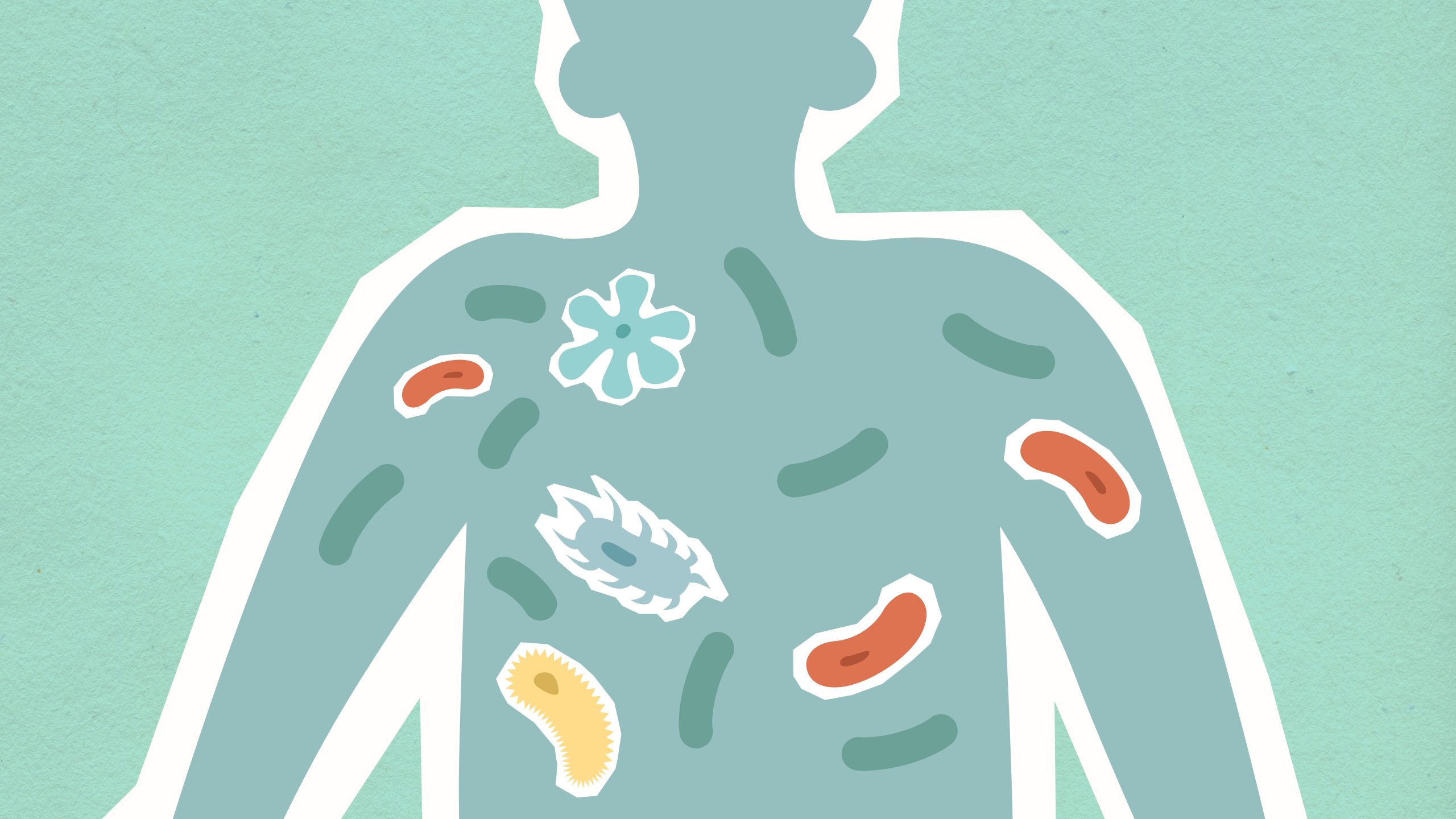
A complex neighbourhood in our guts.
When we think of parasites, we usually imagine harmful organisms that cause disease. However, the relationship between humans and parasites is far more complicated. Some gut parasites can positively influence immune activity, microbial diversity, and the wider gut ecosystem.
One example is Blastocystis, a common intestinal protozoan (a type of single-celled organism) found in many healthy individuals. Although it has sometimes been associated with digestive problems, researchers have also explored whether certain strains may have a beneficial role. Audebert et al. [1] studied healthy adults by analysing stool samples and comparing the gut microbiomes of individuals with and without Blastocystis. They found that people carrying certain Blastocystis subtypes had greater bacterial diversity, a feature often associated with a healthier and more resilient microbiome.
Helminths (intestinal worms – a fan favourite!) also provide an interesting example of how parasites can influence immunity. Over thousands of years, humans and parasites have evolved together, meaning our immune systems have developed adaptive ways of responding to them. Rather than constantly triggering aggressive immune attacks, some helminths can actually encourage anti-inflammatory immune pathways that prevent excessive immune reactions [2]. Not only does this benefit the helminths by making a more comfortable living situation in the host’s body, but the modulation of the immune system appears to, somewhat paradoxically, benefit the host…
The so-called “hygiene hypothesis” suggests that reduced exposure to microbes and parasites in modern societies may contribute to increasing rates of allergies and autoimmune conditions [3]. Populations living in highly industrialised environments experience fewer infections and lower parasite exposure, yet greater rates of immune-related diseases. In simple terms, parasites may act like a training partner for the immune system. Without enough practice and a bit of reassurance, the immune system is more likely to overreact to substances such as pollen, food or viruses. Emerging research suggests that maintaining a healthy mix of harmless parasites alongside beneficial bacteria may support immune regulation more effectively than probiotics alone [4].
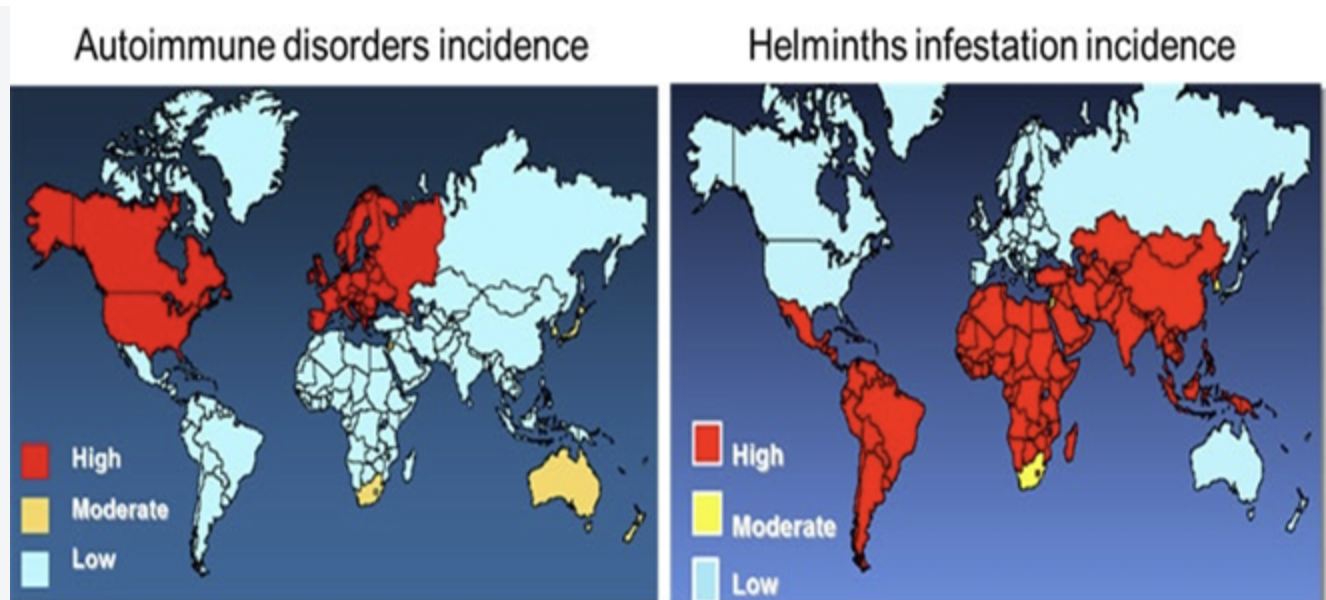
This does not mean parasites should be considered universally beneficial (indeed, I’m sure you can think of some you’d much rather not have), but it certainly challenges the simple idea that every organism labelled a parasite is automatically harmful.
Everyday implications: rethinking gut health
Most of us rarely consider that our gut is a bustling ecosystem, home to a delicate balance of helpful and potentially troublesome residents. The future of gut health may not involve constantly searching for the newest probiotic supplement but instead learning how the entire ecosystem works together. By studying the interactions between probiotics, parasites, microbes and the immune system, scientists may develop more personalised approaches to nutrition and medicine, ones that focus on balance rather than elimination. After all, a healthy neighbourhood is not one in which every unusual resident is removed – but is one in which every different resident coexists harmoniously!
Further exploration
If this article has piqued your interest in the fascinating world of gut parasites and probiotic supplement relationships, there’s so much more to learn! Here are some great resources for anyone eager to dive deeper:
- Ed Yong – I Contain Multitudes (2016) which explores the human microbiome, gut ecology, and interactions between microbes and parasites with storytelling flair.
- Scientific American & The Conversation articles on gut parasites which summarizes current research on Blastocystis, helminths, protozoa, microbiome interactions and relationships which can be both beneficial or harmful to the host in an approachable way.
- Giulia Enders – Gut: The Inside Story of Our Body’s Most Underrated Organ (2015).This provides an engaging explanation of gut health, probiotics and the microbial ecosystem.
References
[1] Audebert, C., et al. (2016). Colonisation with the enteric protozoa Blastocystis is associated with increased diversity of human gut bacterial microbiota. Scientific Reports, 6(1). doi:https://doi.org/10.1038/srep25255.
[2] Giacomin, P. et al. (2015). Suppression of inflammation by helminths: a role for the gut microbiota? Philosophical Transactions of the Royal Society B. https://www.repository.cam.ac.uk/items/0c7f77e1-1eae-4b0d-9d21-cab1862c6cc4
[3] Murdaca, G. et al. (2021). Hygiene hypothesis and autoimmune diseases: A narrative review of clinical evidences and mechanisms. Autoimmunity Reviews. https://www.sciencedirect.com/science/article/abs/pii/S1568997221001178
[4]. Prajapati, K., et al. (2023). Advances in probiotics research: mechanisms of action, health benefits, and limitations in applications. Systems Microbiology and Biomanufacturing.
[5] Schubart, C. (2020). The role of STAT6-regulated gene expression in macrophages and epithelial cells in the context of helminth infections. Thesis: Universitätsklinikum Erlangen. https://www.researchgate.net/publication/340966638_The_role_of_STAT6-regulated_gene_expression_in_macrophages_and_epithelial_cells_in_the_context_of_helminth_infections
